During the dot-com boom, we repeated the mantra: “Anyone can have an idea; the hard part is execution.” At the time, a large chunk of execution was writing the code. Code was expensive. Now, with AI-assisted coding, the price of code has dropped precipitously. Lots of people are talking about what that does to the craft, and to jobs. I’ve been watching it from a different angle.
I’ve been building a lot of little tools recently – I wrote about that in my essay on software for one. I’m not the only one: conversations with my colleagues keep turning into show-and-tell. “Hey, I built a little app that makes sure my backups are up to date!” “I built one that reviews my credit card statement.”
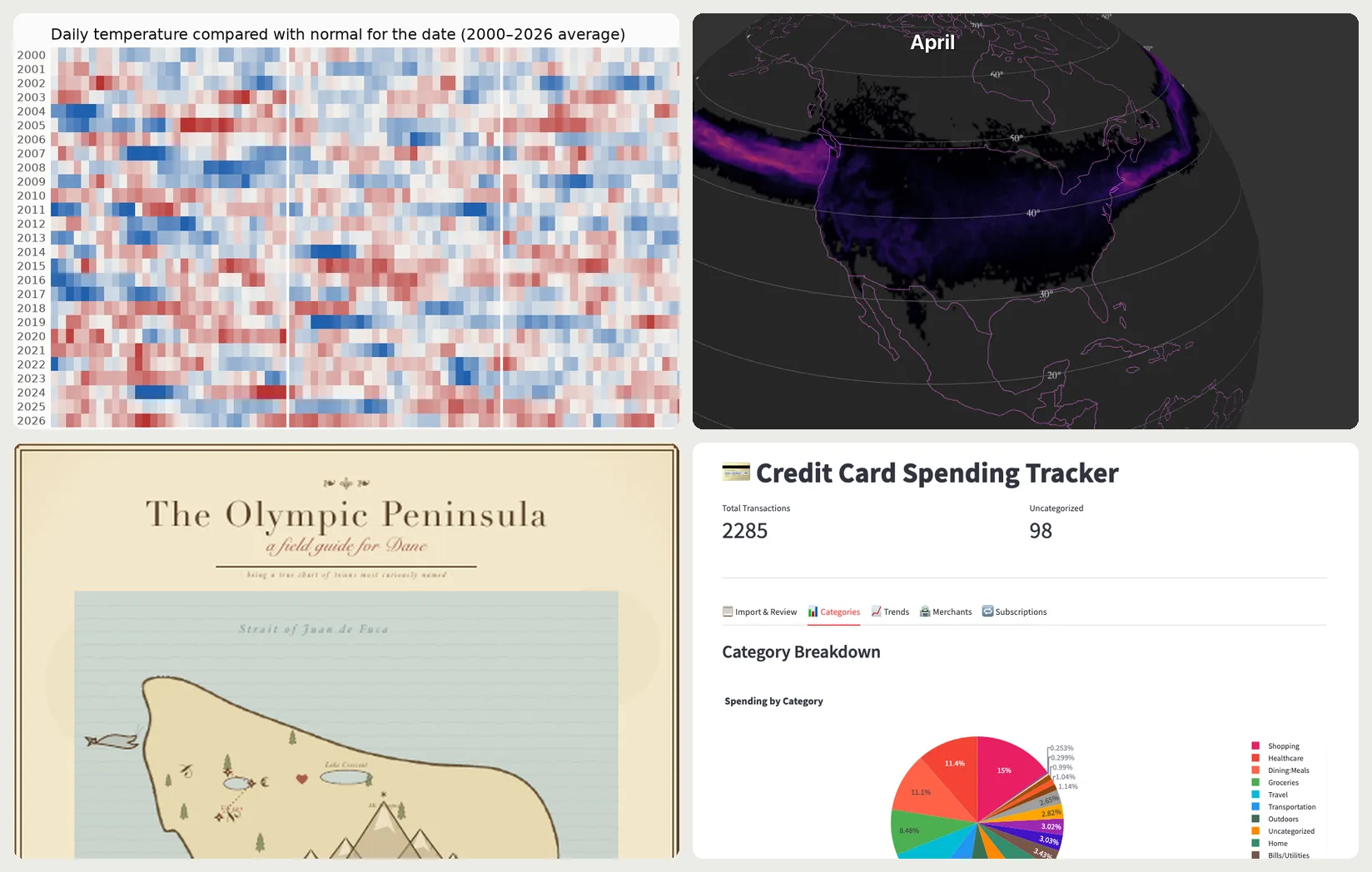
A few times, we’ve tried sharing the code. Honestly, it’s barely worth it. Your statements are in a different format from mine; your backups go to AWS and mine go to a NAS. We could generalize it, but a third person would want something else.
If the code isn’t worth sharing, what is?
What’s worth sharing is the realization itself: oh, I could write an app to take away that chore. Hearing that someone has done it is enough. I could have mine in a few hours, customized for my own use case.
It reminds me of what happens after an Olympic record falls. Within a few seasons, a handful of other athletes match it. It turns out that knowing something can be done is enough to let others do it.
Code works the same way now. Once you know something exists, building your own is almost a formality. This isn’t true for everything. Nobody’s rebuilding a SaaS over a weekend; economies of scale and all the other enterprise moats still matter. But for small, bespoke tools, having the idea has become most of the work.
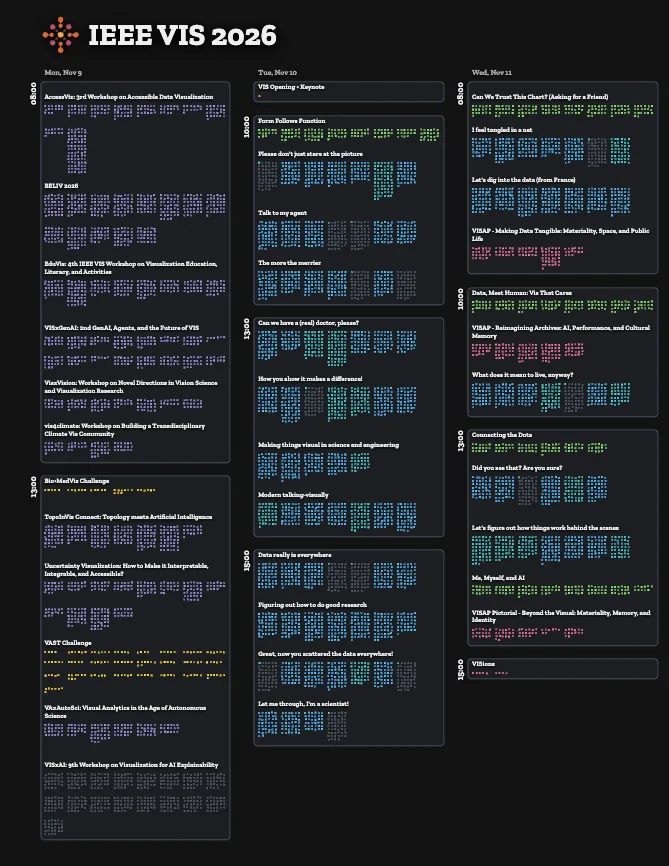
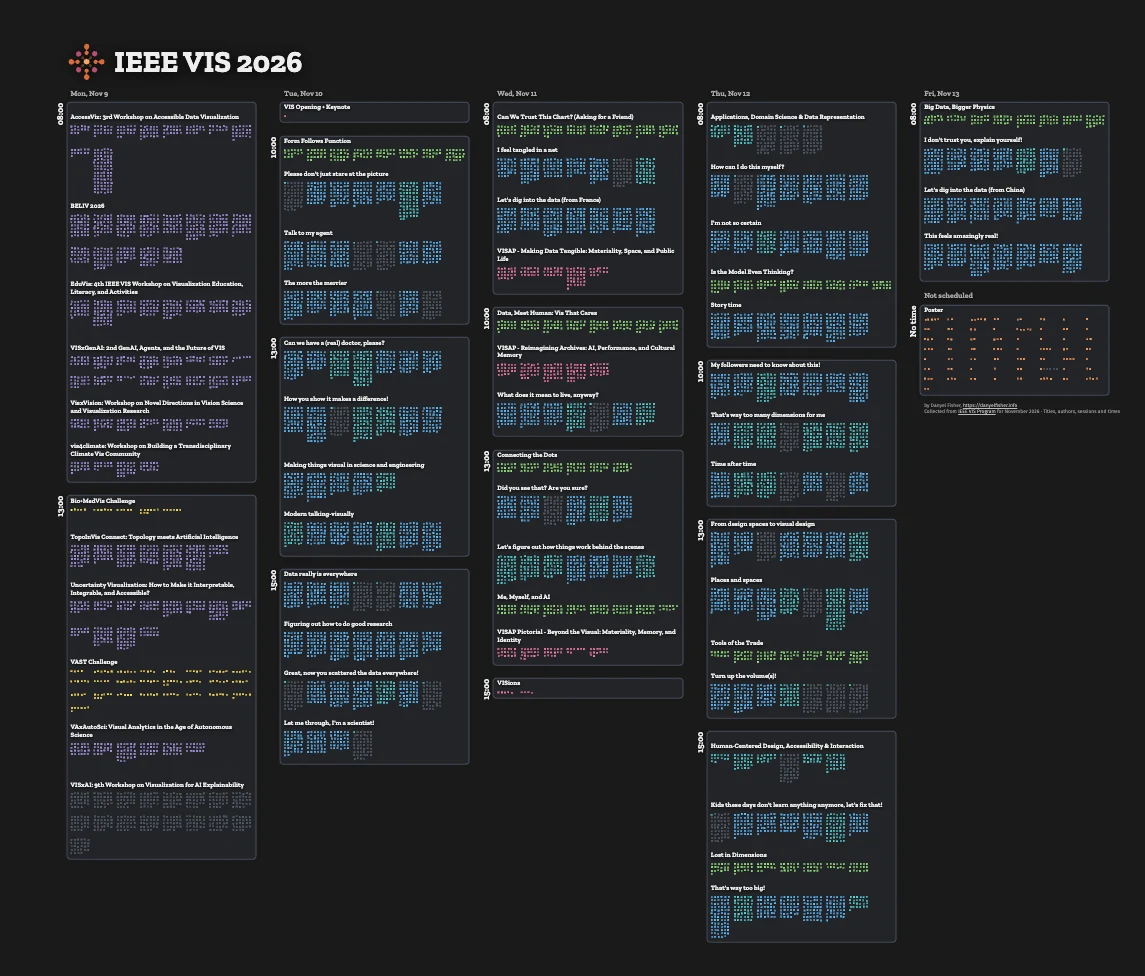
Take my IEEE VIS Map conference program as an example. There’s secret sauce in it, but no secret code. Someone could sit down with the app and my blog posts about the design decisions and build their own copy in a couple of days. That’s partly why I open-sourced it: I can’t stop a copycat.
What they can’t copy is how I arrive at those decisions.
So if code is cheap, and copying an idea that’s already been shown to work is cheap, what’s left to be the hard part? Noticing it first. Seeing the chore nobody has automated yet, or the view of the data nobody has tried.
That kind of noticing doesn’t come from nowhere. It comes from time spent with the people who live in a domain: watching how they actually work, and where they get stuck. Sometimes, that person is me: the VIS Map came out of years of sorting through conference proceedings, and my experience as an author, attendee, and organizer of the conference.
In my consulting, I work closely with people who are immersed in a domain. That’s the part cheap code hasn’t touched.
If you’ve got experts and data and a sense that something’s missing, I’d be glad to talk.